

Wialon Engine Hours Tracking
Wialon Engine Hours Tracking measures how long the engine of a connected vehicle or machine operates, providing a more accurate view of equipment use than mileage alone. Depending on the installed hardware and system configuration, Wialon can calculate operating time using an ignition sensor, an absolute engine-hours sensor, or a relative engine-hours sensor. Fleet managers can then review accumulated runtime and detailed operating intervals through the platform. By connecting engine activity with location, movement, idling, and other available telematics data, Wialon helps businesses better understand how vehicles, generators, construction equipment, and other powered assets are being used. Learn more about how the Wialon engine-hours counter works.

Schedule Maintenance Based on Actual Engine Runtime
Engine-hour tracking helps fleets schedule maintenance according to how long an engine has worked, rather than relying only on mileage or calendar dates. This is especially valuable for equipment that operates while stationary, such as generators, cranes, loaders, compressors, and service vehicles that idle at job sites. Wialon allows businesses to create service intervals based on engine hours, mileage, or time. Maintenance teams can use these intervals to plan inspections, oil changes, filter replacements, and other recurring services around actual asset use. More accurate scheduling can reduce the risk of servicing equipment too early, overlooking heavily used assets, or allowing overdue maintenance to contribute to avoidable downtime.

Identify Idling and Unproductive Engine Use
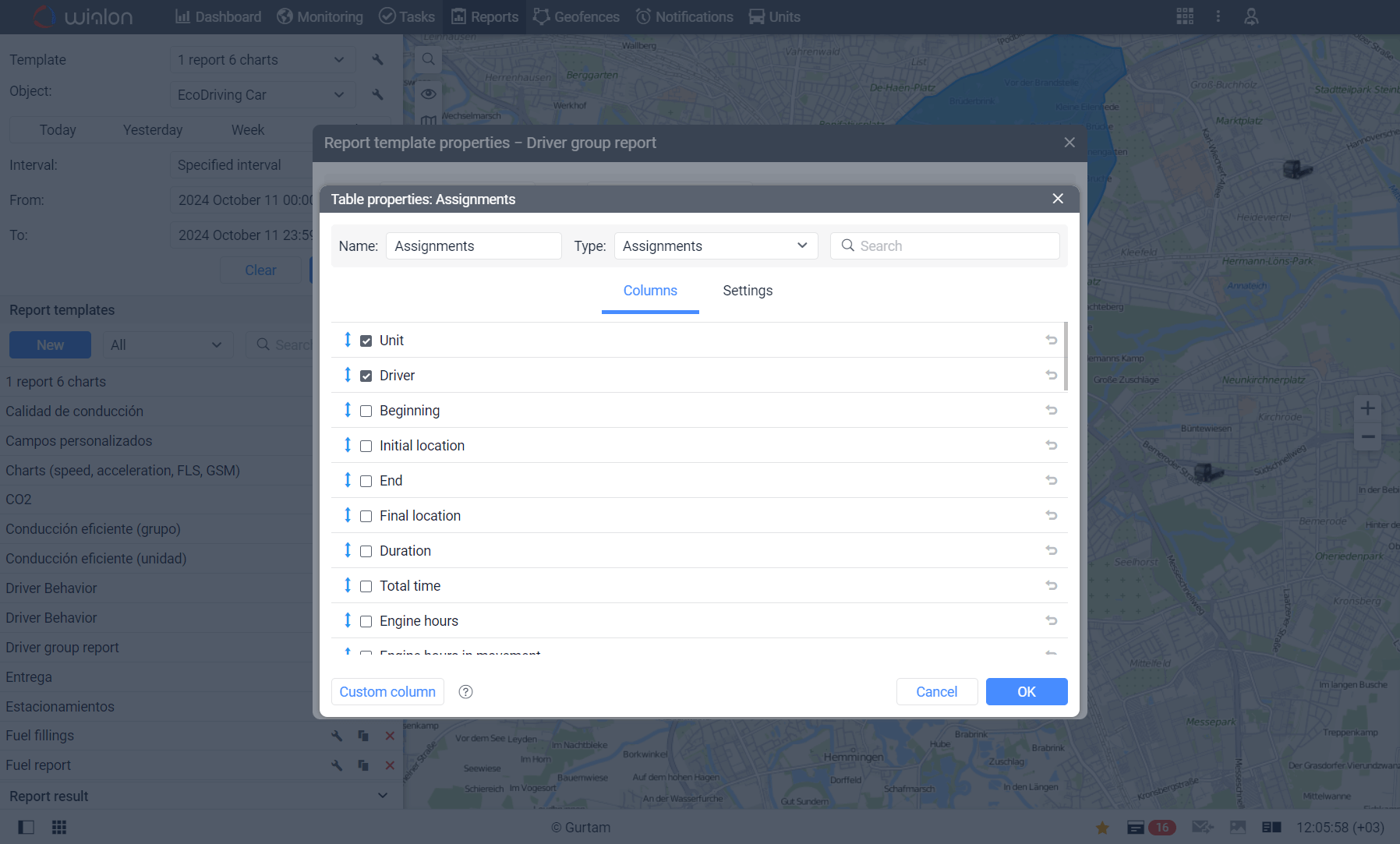
Wialon Engine Hours Tracking helps managers distinguish between time spent moving and time spent running while stationary. The platform’s engine-hours reports can show when an operating interval began and ended, its initial and final locations, engine runtime, movement time, idling time, mileage, and other available information. When compatible fuel sensors and vehicle data are available, reports can also help evaluate fuel consumed during engine operation and idling. These insights allow fleet managers to identify excessive idle time, investigate inefficient operating practices, and provide targeted driver or operator coaching. Reducing unnecessary engine use may help lower fuel consumption, operating costs, emissions, and avoidable engine wear.
Measure Equipment Utilization and Balance Workloads
Engine hours provide a consistent way to compare how frequently vehicles and powered assets are being used, including equipment that accumulates little or no mileage. Wialon reports can combine runtime with movement, location, geofences, drivers, attached implements, and supported sensor information. Depending on the available data and configuration, Wialon can also calculate utilization and productivity indicators based on engine operation and useful implement activity. Managers can use this information to identify heavily used assets, recognize equipment that may be underutilized, and distribute work more evenly across the fleet. Better utilization visibility supports informed decisions about vehicle assignments, equipment rotation, maintenance priorities, and future fleet purchases.
Make Engine-Hour Data Work for Your Fleet
Wialon Engine Hours Tracking turns engine runtime into practical information for maintenance planning, idling control, equipment utilization, and operational reporting. Forall Tracking can help your business select compatible tracking hardware and configure the sensors, counters, reports, and service intervals needed to monitor engine hours effectively. Available measurements and reporting details depend on the tracking device, transmitted data, connected sensors, and Wialon configuration. Contact us to learn how Wialon engine-hours tracking can be adapted to your vehicles, machinery, and day-to-day fleet operations.
Frequently Asked Questions
What is Wialon Engine Hours Tracking?
Wialon Engine Hours Tracking records how long the engine of a connected vehicle or machine operates. It helps businesses monitor actual equipment use, plan maintenance, evaluate idling, and understand asset utilization.
How does Wialon track engine hours?
Wialon can calculate engine hours using data from an ignition sensor, an absolute engine-hours sensor, or a relative engine-hours sensor. The method and accuracy depend on the tracking device, connected sensors, transmitted data, and system configuration.
What is the difference between engine hours and mileage?
Engine hours measure how long an engine operates, while mileage measures the distance a vehicle travels. Engine hours can provide a more useful maintenance indicator for equipment that works while stationary or spends significant time idling.
Can Wialon schedule maintenance based on engine hours?
Yes. Wialon allows service intervals to be configured using engine hours, mileage, or elapsed time. This helps maintenance teams identify when inspections, oil changes, filter replacements, and other recurring services are approaching or overdue.
Why are engine hours useful for fleet maintenance?
Engine hours reflect actual engine operation, including time when a vehicle or machine is running without travelling. Maintenance based on runtime can help businesses avoid servicing lightly used equipment too early or overlooking heavily used assets with low mileage.
What types of vehicles and equipment can use engine-hour tracking?
Engine-hour tracking can be used with cars, trucks, buses, construction equipment, agricultural machinery, generators, cranes, loaders, compressors, and other powered assets. The equipment must have compatible tracking hardware and provide the required operating data.
Can Wialon track engine hours for stationary equipment?
Yes. Wialon can monitor the operating time of stationary equipment such as generators, pumps, compressors, and industrial machinery when a compatible tracking device or sensor is installed. These assets may accumulate engine hours even though they record little or no mileage.
Can Wialon distinguish movement time from idling time?
Yes. When the required engine and movement data are available, Wialon reports can separate engine operation into movement and idling periods. This helps managers understand how much runtime is productive and how much may be associated with unnecessary idling.
What information can appear in a Wialon engine-hours report?
Depending on the available data and report configuration, an engine-hours report can show the beginning and end of each operating interval, duration, initial and final locations, movement time, idling time, mileage, fuel consumption, driver information, and other sensor values.
Can Wialon show where an engine was operating?
Yes. Engine-hours reports can include the initial and final locations associated with an operating interval. Managers can also compare engine activity with tracks, geofences, and other location information available in Wialon.
Can Wialon help identify excessive idling?
Yes. Wialon can compare engine runtime with movement data to identify periods when an engine was running while the vehicle remained stationary. Managers can use this information to investigate idling patterns and support more efficient operating practices.
Can engine-hour tracking help reduce fuel costs?
Engine-hour data can help managers identify unnecessary idling and other inefficient operating patterns that may waste fuel. When compatible fuel sensors or fuel-consumption data are available, Wialon reports can provide additional insight into fuel used during engine operation.
Can Wialon measure equipment utilization?
Yes. Engine hours can be used to compare how frequently vehicles and machines are operated. This helps businesses identify heavily used assets, recognize underutilized equipment, balance workloads, and make more informed fleet-planning decisions.
Can Wialon compare engine hours across multiple assets?
Yes. Reports can be generated for multiple connected vehicles or machines, allowing managers to compare runtime across a fleet. This can support equipment rotation, maintenance prioritization, asset assignment, and replacement planning.
Does Wialon keep historical engine-hour records?
Yes. Wialon can store and report historical engine-hour intervals based on the data received from connected tracking devices. The available history depends on the account settings, data retention, sensor configuration, and selected reporting period.
Can Wialon track engine hours for individual drivers?
Wialon can associate engine-hour information with drivers when driver identification is configured and the necessary data is available. This can help managers understand which operators used specific vehicles or equipment during recorded operating periods.
Can engine hours be monitored within geofences?
Yes. Engine activity can be analyzed alongside Wialon geofences to help determine where vehicles or equipment were operating. This may help businesses review runtime at depots, customer locations, construction sites, service areas, or other defined locations.
How accurate is Wialon Engine Hours Tracking?
Accuracy depends on the quality of the data supplied by the tracking hardware, vehicle interface, ignition input, or engine-hour sensor. Proper installation and configuration are important because missing messages, incorrect sensor settings, or unreliable inputs can affect calculated runtime.
Does every GPS tracking device support engine-hour tracking?
No. Engine-hour tracking requires a compatible device and an appropriate source of engine-operation data. Forall Tracking can help determine whether an existing device supports this function or whether additional hardware, sensors, or configuration may be required.
How can Forall Tracking help set up Wialon Engine Hours Tracking?
Forall Tracking can help businesses select compatible tracking hardware and configure engine-hour sensors, counters, reports, and service intervals in Wialon. Contact us to discuss how engine-hour tracking can support maintenance, idling control, utilization analysis, and operational reporting for your fleet.

Check Pricing
All of our GPS tracking solutions are customized for your business and tailored to your budget...

Return on Investment
At GPS Tracking Canada, we understand that every company benefits from GPS Tracking in different ways...

Request a Demo
Get a live one-on-one demonstration from GPS Tracking Canada. See for yourself how customized...
For more information, or to schedule a demo or an installation,